Kashi Varanasi – History, Importance, and Best Places to Visit
रामकृष्णं संसारसागर-महादुःख-भय-नाशनम्
वाराणसीनाथमनाथनाथं श्रीविश्वनाथं शरणं प्रपद्ये ॥
“I surrender to Lord Vishwanath of Kashi, protector of the helpless, who ends the world’s great suffering.”
A line chanted at dawn on the ghats reminds every pilgrim why this city matters.
Varanasi—revered as Kashi and affectionately nicknamed Banaras—is more than a dot on the map; it is India’s spiritual mainspring and the planet’s oldest living city. Archaeologists date the earliest settlement layers at Rajghat to around 1800 BCE, meaning rituals have unfolded on these riverbanks for over three millennia. Perched on the sacred River Ganges, the city functions as a living chronicle where history, faith, craft and daily commerce interlace in real time.
- Why people come: Hindus believe dying here grants moksha (liberation); Buddhists honour nearby Sarnath, site of the Buddha’s first sermon; Jains revere it as the birthplace of three Tirthankaras.
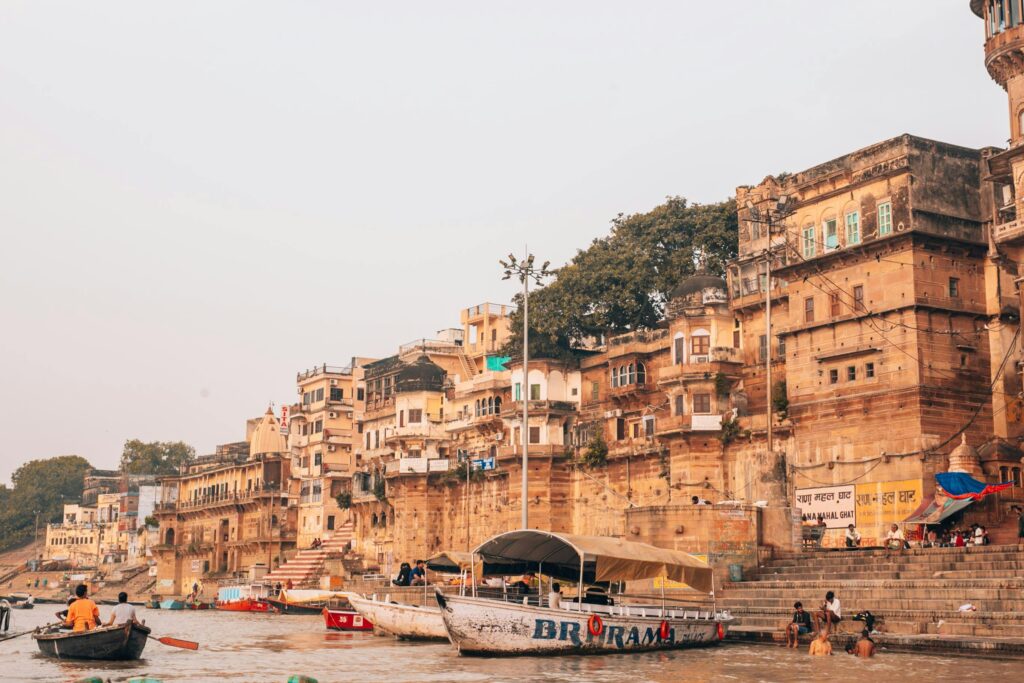
- How it feels: Dawn breaks with conch-shell blasts, priests chant on 84 ghats, silk looms clack in Sarai Mohana, and chai sellers weave through alleys scented with sandalwood. By dusk, thousands gather for the hypnotic Ganga Aarti at Dashashwamedh Ghat, flames reflecting off the river like liquid gold.
- Why it matters to India: The golden-spired Kashi Vishwanath Temple—one of Hinduism’s 12 jyotirlingas—anchors the nation’s religious map. Festivals such as Dev Deepawali draw live TV coverage and six-million-plus annual pilgrims, sustaining boatmen, flower vendors and priests whose livelihoods depend on this ceaseless tide of faith.
- What this guide offers: A clear, fact-checked roadmap to Varanasi’s layers—history, ghats, temples, festivals, crafts, food, etiquette and logistics—so you can engage with the city respectfully and meaningfully.
History of Varanasi
Varanasi’s story begins in the late‐Vedic age: archaeologists digging the Rajghat plateau have uncovered brick dwellings and painted pottery dated to about 1800 BCE, proof that Kashi was already an organized settlement when the rest of the world was still waking up. By the 6th century BCE the city had become a wealthy trading republic; its spiritual stature soared when Gautama Buddha delivered his first sermon at nearby Sarnath, setting Buddhism on its Asian journey.
Under the Mauryan Empire—especially Ashoka in the 3rd century BCE—Kashi gained imperial support for monasteries and learning centres. The Gupta period (4th–6th centuries CE) crowned this legacy: Sanskrit academies, temple architecture and metal art flourished so brightly that Chinese monk Xuanzang recorded “30 monasteries and 100 shrines” after his 7th-century visit.
Medieval turbulence followed. Mahmud of Ghazni’s 11th-century raid shattered many temples, yet the local Gahadavala rulers rebuilt quickly. The Mughal period added fresh layers: tolerant Akbar financed repairs, but Aurangzeb’s edicts demolished key shrines—most infamously the original Kashi Vishwanath Temple.
Resilience again prevailed. Maratha queen Ahilyabai Holkar reconstructed Kashi Vishwanath in 1780, wrapping the shikhara in 800 kg of gold. British rule (1775–1947) overlaid colonial architecture, rail lines and—crucially—the founding of Banaras Hindu University in 1916, still one of Asia’s premier centres for Sanskrit and Vedic studies.
In independent India the city has balanced preservation with access. The Shri Kashi Vishwanath Corridor project, launched 2021, widened pilgrim paths while conserving heritage facades; Smart-City funds now restore ghat steps and install river-water treatment. Three millennia on, Varanasi remains what it has always been: a living museum where every dynasty, faith and reform movement has left a discernible imprint.Festivals & Special Occasions
Festivals & Special Occasions
Varanasi’s calendar overflows with ritual, colour and sound. Below is a detailed look at the celebrations that give the city its nonstop heartbeat—arranged roughly in the order they appear through the Hindu lunar year (exact dates shift annually).
Major Annual Festivals
Dev Deepawali – Full-moon night of Kartik (Oct–Nov)
- Ghats from Raj Ghat to Assi Ghat glitter with more than a million clay lamps; priests perform an extended Ganga Aarti watched from rooftops and boats.
- Locals sponsor individual staircases, writing family names in marigold petals; donors receive blessed sandal-paste tilak.
- Tour-friendly extras: classical-music mehfils on Mehrotra Mansion terrace, heritage photo walks that finish at Dashashwamedh Ghat for the final flame salute.
Ganga Mahotsav – Five days before Dev Deepawali
- Daytime craft bazaar sells Banarasi silk, gulabi meenakari jewellery and brass lamps; evenings host Hindustani stalwarts on a floating stage.
- Long-oar boat races between Bharatiya Dash and Varanasi Boat Club draw roaring crowds; winners receive silver oar miniatures blessed by temple priests.
Holi – Full-moon of Phalguna (Feb–Mar)
- Godowlia Crossing erupts in clouds of pink and yellow gulal; Assi Ghat holds a safer, family-friendly colour zone.
- Locals smear each other with sandalwood paste before colours start; bhang-laced thandai flows from roadside urns.
- Visitors can join “dry Holi” balcony parties run by heritage havelis—powder is provided, water balloons are banned to protect cameras.
Diwali – New-moon of Kartik (Oct–Nov)
- Households line ledges with mustard-oil diyas; children float lotus-shaped lamps on the Ganges for prosperity.
- At night, Dashashwamedh Ghat hosts Lakshmi Puja, then fireworks paint the sky; street food stalls roll out ghee-fried jalebis and khoya barfi.
- Temples stay open past midnight, and locals exchange trays of anarsa and chakli instead of expensive sweets to honour frugal goddess Lakshmi.
Mahashivaratri – 13th night of Magha (Feb–Mar)
- Devotees queue at Kashi Vishwanath Temple with bilva leaves, hemp ropes and sacred water drawn that morning from the Ganges.
- From dusk till dawn, akhara sadhus perform tandava-style dances; drummers keep a hypnotic rhythm that rises at each hour’s Mahanyas chant.
- Fasting visitors break vrat at sunrise with kheer made from raw sugarcane juice—a ritual said to purify body and intent.
Nag Nathaiyya – Early winter (Oct–Nov)
- Re-enactment of Krishna subduing the serpent Kaliya on Tulsi Ghat. A child-actor leaps from a kadamba tree into the water, climbs a hidden platform on a painted boat “serpent,” then strikes a flute pose.
- Vaishnav monks chant the Sudarshan Ashtakam; conch horns punctuate each scene; floating leaf-bowls with camphor lamps follow the drama downstream.
- Best viewed from paddleboats that linger mid-stream; guides narrate the episode in Hindi and English.
- Navratri (twice a year) – Nine nights of Durga hymns; the Durga Kund tank hosts lamp-floating rituals, and clay idols receive fresh saris daily.
- Makar Sankranti – First holy dip of the solar year; kids duel with bamboo-spool kites that fill the winter sky.
- Basant Panchami – Spring welcome; temples drape the Saraswati idol in yellow silk and offer saffron-rice prasad.
- Guru Purnima – Disciples honour gurus; Sanskrit colleges hold open classes on ancient commentaries.
- Ganga Dussehra – Ten ceremonial dips thought to cleanse ten lifetimes of sin; riverbank priests chant the Dashashloki as they pour jars of perfumed milk into the current.
- Hanuman Jayanti – Sankat Mochan Temple distributes 800 kg of boondi laddoo; brass bands play the Sankat Mochan Chalisa nonstop.
- Raksha Bandhan & Bhai Dooj – Sibling-bond rituals; sisters float thread-tied coconut husks downriver wishing brothers long life.
- Janmashtami – Midnight Krishna birth plays at Tulsi Manas Temple; pots of curd are “stolen” by costumed children imitating Gopal.
- Ganesh Chaturthi – Clay Ganesha idols parade to Raj Ghat for immersion; chants of Ganapati Bappa Morya echo against palace façades.
- Margashirsha Purnima – Devotees recite the Vishnu Sahasranama through the night, ringing hand-bells at each stanza change.
Daily & Weekly Ritual Anchors
- Ganga Aarti – Sunset at Dashashwamedh, sunrise at Assi, and a quieter torchlit version at Raj Ghat; synchronized bell-ringing, brass lamps and drumbeats welcome or bid farewell to Surya.
- Budhwa Mangal – Summer Tuesdays when Sankat Mochan serves free khichdi and jaggery water to more than 10,000 devotees.
- Somvar Vrat – Mondays dedicated to Shiva; flower markets open before dawn to meet surging demand for bilva leaves.
Ghats of Varanasi
Introduction
Stretching from Assi to Adi Keshava, the ghats of Varanasi are more than stone steps—they’re living thresholds where sacred time meets everyday life, and where pilgrims, priests, wrestlers, washerfolk, and boatmen share the same riverside stage. Each ghat holds a distinct role: some host dawn baths and Sanskrit recitations, some resound with conches during evening aarti, and others carry the solemn dignity of cremation rites that embody Kashi’s promise of liberation. For travellers choosing places to visit in Varanasi, understanding these riverfront spaces unlocks the city’s logic: a south‑to‑north flow that turns a simple walk or boat ride into a map of traditions, festivals, and stories carried forward every day.
Assi Ghat
Southern anchor where the Assi rivulet meets the Ganges, Assi is both a pilgrim starting point and a social square for students and residents. The riverfront hosts the Subah‑e‑Banaras programme at dawn—Vedic chants, instrumental ragas, and yoga—before chai stalls and boatmen take over. Festivals and exam seasons amplify footfall, so sunrise visits keep it peaceful; modest dress, remove shoes at shrines, and bargain respectfully for boat rides.holyvoyages+1
Ganga Mahal Ghat (I)
Fronted by a 19th‑century Maratha palace, this ghat’s scalloped arches and balconies frame long views upriver, attracting art students and photographers. The steps are broad but quieter than Assi; late afternoon shade makes it a cooling stop in summer. Combine with Tulsi and Rewan on a south‑segment walk; carry water and avoid obstructing ritual areas during puja.wikipedia
Rewan (Rewa) Ghat
Raised by the Rewa princely state, this landing once served as a semi‑private bathing spot and retains a local, unhurried rhythm. Fisherfolk mend nets at first light, and vendors are sparse, making it calmer than neighbouring ghats. Photos are easiest at mid‑morning when light clears the palace face; step carefully on wet stone.varanasismartcity+1
Tulsi Ghat
Associated with poet‑saint Tulsidas, parts of the Ramcharitmanas are traditionally linked to this site, giving it a literary aura. November’s Nāg Nāthaiyyā river drama recreates Krishna’s victory over Kaliya, while the adjacent akhāra keeps traditional wrestling alive at dawn. Expect festival crowds; arrive early and follow marshal directions during performances.wikipedia
Bhadaini Ghat
A working ghat where community laundry and bathing intersect, Bhadaini offers everyday Varanasi rather than pageantry. Morning queues move steadily; twin water towers behind the riverfront make navigation easy. Respect washing lines and give families privacy while shooting street photography.wikipedia
Janaki Ghat
A pastel Sita shrine crowns short stairs where newlyweds seek blessings for harmony and prosperity. Priests tie ceremonial threads and perform brief puja, particularly on auspicious lunar days. Dusk paints the plaster warm; remove footwear near the sanctum and keep voices low.wikipedia
Mata Anandamayi Ghat
Linked to the 20th‑century mystic Anandamayi Ma, this ashram ghat keeps a contemplative pace and light devotional programming. Early bhajans carry across water before the day warms up. Cover the head within ashram precincts and avoid filming devotions without consent.wikipedia
Vaccharaja Ghat
Named for the “king of cows,” the ghat recalls a time when herds watered beneath fig shade along the river edge. Today it’s a modest, reflective shelf of stone between busier neighbours. Benches and lower traffic make it a rest point on foot itineraries; pack out litter.wikipedia
Jain Ghat
Reserved historically for Śvetāmbara monks’ ablutions, Jain Ghat emphasises silence and ritual purity over spectacle. Marble steps and shaded niches help during hot months. Photography is best avoided during rituals; speak softly and keep to the side if ceremonies are underway.wikipedia
Nishadraj Ghat
This landing honours the boatman‑king Nishadraj from the Ramayana narrative, a patron of ferrymen and fishermen. Skiffs tie up at dawn and kids dive after midday when heat rises. Sunrise brings soft light for portraits; ask permission before photographing individuals.wikipedia
Prabhu Ghat
A plain stone landing chiefly used by porters ferrying vegetables into the inner lanes. By 7 am, baskets of greens and marigolds crest the stairs, then the traffic thins. It’s a slice of local logistics; step aside for load‑carriers and avoid blocking narrow exits.wikipedia
Panchkota Ghat
Backed by old Bengal‑style warehouses, Panchkota hints at a 19th‑century trade past via faded signboards and shuttered godowns. The lane behind rings with rickshaw bells and hawkers, especially on market days. Good mid‑afternoon texture for urban shots; watch for handcarts.wikipedia
Chet Singh Ghat
Fortified riverfront of Raja Chet Singh, whose 18th‑century clash with the British left a storied bastion above the steps. Pinkish ramparts glow at sunrise, and monsoon clouds dramatise the skyline. Rooftop viewpoints may require permission; heed local guidance during high water.wikipedia
Niranjani Ghat
Managed by a Shaiva monastic order, this stretch abuts ritual grounds where a perpetual sacred fire is maintained. Drums and conch shells mark the end of funeral rites through the day. Observe from a respectful distance; no photos of ceremonies or mourners.wikipedia
Mahanirvani Ghat
Another akhara seat, Mahanirvani blends martial and devotional disciplines in dawn routines. Wrestlers bathe before practice; occasional ascetic funerals bring solemn processions. Visitors should keep clear of training areas and follow gestures from custodians.wikipedia
Shivala Ghat
Flanked by a Nepalese‑style palace, Shivala turns gentle at sunset when the façade catches slanting light and river breeze. A small Shiva shrine draws steady evening offerings. Paths are uneven; good footwear helps on the stepped alleys behind.wikipedia
Gularia Ghat
Children compete in splash contests off the lower ledges while saris ripple on clotheslines overhead. Evenings carry whiffs of incense from home shrines along the alley. Keep equipment minimal and hands free for the stairs.wikipedia
Dandi Ghat
Ascetics with danda staffs pause here for ritual dips and mantras on festival cycles. Red tilak marks dot the railings as days progress. Pilgrims may request blessings with courtesy; offer space when sadhus perform austerities.wikipedia
Hanuman Ghat
A bright Hanuman idol greets visitors at the arch; nearby akharas keep the old discipline of pehlwani alive at first light. Snack stalls selling chana and lemon water sustain morning practitioners. Avoid flash near idols; mornings are best for interactions.wikipedia
Old Hanuman (Prachina) Ghat
An older landing now quieter and tended by naga ascetics, with incense coils around a compact shrine. Minimal tourist draw preserves its contemplative feel. Step softly and keep conversation low.wikipedia
Karnataka Ghat
Built with Mysore patronage, this ghat carries southern devotional rhythms and festival décor like mango‑leaf torans. Full‑moon nights sometimes feature Kannada hymns. Confirm special‑day timings locally; approaches can be narrow on event days.wikipedia
Harishchandra Ghat
Secondary cremation ground named for the truth‑king; an electric crematorium operates alongside wood pyres. Mornings are quieter; evenings see more processions. Maintain distance, no photography, and keep to marked public areas.wikipedia
Lali Ghat
A red‑brick landing known for drying turmeric‑dyed linens and seasonal tobacco leaves in winter sun. By late morning the activity ebbs and quiet returns. Avoid stepping on laid fabrics; ask before close‑ups.wikipedia
Vijayanagaram Ghat
Andhra patronage shows in the old palace arches and occasional carved elephants along the terrace. Broad steps invite picnics on winter afternoons. Pack out waste and keep music low—this is also a prayer space.wikipedia
Kedar Ghat
The Dravidian‑style Kedareshwar temple anchors this ghat, popular for ritual baths and southern devotees. Marble paving gets slick; early morning sees orderly queues for puja. Dress modestly; temple interiors often prohibit photography.holidify+1
Chauki Ghat
Once a river checkpoint (chauki), it’s now a family‑friendly bathing slope with a kinder gradient. Afternoons bring elders and children when currents are milder near the edge. Stay within shallow zones; heed local advice in monsoon.wikipedia
Kshemeshvara (Somesvara) Ghat
Evening bhajans light rows of small lamps along niches as devotees gather. A neem tree offers dependable midday shade. Weekends host Sanskrit recitation circles; observe quietly.wikipedia
Mansarovar Ghat
Named after the Himalayan lake, this ghat is favoured for ancestor rites and symbolic purifications. Dusk sees gentle flotillas of lamps pushed into the current. Priests may guide rites in simple Hindi; donations are customary, not fixed.wikipedia
Narada Ghat
A riverside platform with a Nandi/bull presence and steady devotional singing in monsoon months. Snack vendors cluster near the upper landing. Keep the stairs clear for processions; watch footing after rain.wikipedia
Raja Ghat
A broad, symmetrical stair linked to Peshwa restoration, with a palace façade suited to wide‑angle shots. Sparrows nest in carved eaves above the mid‑landing. Tripod use is easier at midday when crowds thin.wikipedia
Khori Ghat
A half‑roofed barber point for ritual head‑shaving is tucked near the lower tiers. A tide‑kissed lingam hides in a recess locals point out to visitors. Seek consent before photographing barbers and patrons.wikipedia
Pandey Ghat
Alleys behind the landing house spice warehouses that perfume the air at sunrise. Chai breaks on burlap sacks are a local ritual. Bargain kindly; vendors expect some negotiation.wikipedia
Sarveshvara Ghat
Palm readers set up beneath the neem, chalking planetary diagrams when students queue for exam blessings. It’s busiest on auspicious days tied to education. Silence phones during readings; small tips are polite.wikipedia
Digpatia Ghat
A blue‑washed Bengali balcony overlooks the steps, with a tucked‑away Durga shrine inside the courtyard. Drums and lamp‑lines appear during Puja season. Courtyard entry may be limited; ask a caretaker.wikipedia
Chausatthi Ghat
Known for 64 lamp niches that glitter on Diwali and new‑moon nights of tantric observance. A small Yogini association appears in local lore and signage. Respect ritual boundaries and avoid intrusive lighting.wikipedia
Rana Mahal Ghat
Udaipur‑style palace façades glow honey‑gold at dawn as swallows skim the arches. Frescoes and scallops make it a study in Rajasthani riverfront design. Keep distance from private residence areas; stick to public steps.wikipedia
Darbhanga Ghat
A palatial riverfront, now partly a heritage hotel, whose marble colonnades mirror in calm water. Rooftops and terraces create sweeping river perspectives. Access points may be controlled; follow posted guidance.wikipedia
Munshi Ghat
Named for a court official/litterateur, the landing is wide and photogenic, often used by crews for shoots. Evenings bring lantern sellers and casual musicians. Tripod use may need a quick word with guards.wikipedia
Ahilyabai Ghat
Rebuilt under the Maratha queen Ahilyabai Holkar, whose patronage anchors multiple Varanasi shrines. The plinth frequently hosts open‑air Sanskrit lessons. Good for architectural study of Maratha riverfront work.wikipedia
Sitala Ghat
Dedicated to the smallpox goddess, Tuesdays see mothers offering neem and turmeric at the altar. Simple prasad circulates among families. Keep photography discreet around children and offerings.wikipedia
Dashashwamedh Ghat
Epicentre of the nightly Ganga Aarti where priests perform synchronised lamp rituals with conch, bells, and incense. Arrive 45–60 minutes early for rail seating or book a boat; monsoon may shift staging slightly. No drones or high tripods during aarti; follow marshals’ instructions.wikipedia
Prayag Ghat
Symbolic echo of the Allahabad confluence, this landing draws Kartik bathers with conches and oil lamps. Boatmen gather here before aarti crowds swell downstream. Keep belongings minimal; pickpockets work dense evenings.wikipedia
Rajendra Prasad Ghat
Named for India’s first president, this broad stage handles festival overflow and cultural programmes. Loudspeakers mount on poles during peak nights. Earplugs help if sensitive to volume; exits are on both flanks.wikipedia
Man Mandir Ghat
Crowned by a 17th–18th‑century observatory, stone instruments once tracked planetary motions above the river. The sandstone terrace gives a high viewpoint over the crescent. Timed entry may apply; check locally before climbing.wikipedia
Tripura Bhairavi Ghat
A fierce‑goddess altar marks the landing, with red hibiscus and lamps on lunar dark nights. Long exposures capture lamp trails beautifully. Avoid blocking narrow stairs during puja.wikipedia
Meer Ghat
Spice‑market aromas drift riverward as ochre walls warm late in the day. Locals feed fish at dawn along the lower tiers. Keep sandals handy; stone gets hot by noon in summer.wikipedia
Yajneshvara / Naya Ghat
Historically a grain dock; the current steps are wider and friendlier for group dips. The adjacent Ganesh shrine has distinctive saffron‑white stripes. Children play marbles on the platforms in afternoons.wikipedia
Nepali Ghat
Cedar‑wood pagoda in the style of Kathmandu’s Pashupatinath stands above breezy steps. Sandal‑scented beams creak gently in heat. Photography is best from the side to catch layered roofs.wikipedia
Lalita Ghat
Home to the Nepali pagoda enclave; a calm eddy between denser ghats to either side. Late afternoon light turns the red oxide radiant. Stay mindful of worshippers entering side shrines.wikipedia
Bauli / Umaraogiri / Amroha Ghat
A rare step‑well sits near the landing, holding monsoon water longer than the river edge. Kingfishers scan the green surface from low wires. Edges can be slick—watch step and keep children close.yatradham
Jalasen (Jalasayi) Ghat
Fishermen unload colourful skiffs at dawn and spread nets on bamboo poles. Daylight brings neighbourhood bathers and washerfolk in shifts. Ask before photographing net‑mending close‑ups.wikipedia
Kshiriki Ghat
Among the quietest landings, good for sunrise meditation away from aarti crowds. Stone seats remain cool even at noon. No dedicated shrine—treat it as a public contemplative space.wikipedia
Manikarnika Ghat
Main cremation ground with an enduring sacred fire; pilgrims associate it with instant moksha and the legend of Shiva’s jewel. Pyres burn day and night; watch from designated balconies or a stationary boat. No photos of rites or mourners; heed instructions from attendants.wikipedia
Baji Rao Ghat
Built under Peshwa patronage in the 18th century, with a Dattatreya shrine marked in saffron and white. The brass bell marks hours along the landing. Less crowded than neighbouring Manikarnika and Scindia.yatradham
Scindia Ghat
Famous for the partially submerged Shiva temple leaning several degrees into the water. Misty dawns and low‑water seasons show the tilt best. Strong currents near the base—keep to the higher steps.wikipedia
Sankata Ghat
Dedicated to a crisis‑relief goddess; Tuesdays surge with scarf‑tying vows and neem‑oil stalls. The back lane is tight—single‑file helps. Keep valuables secure in dense foot traffic.wikipedia
Ganga Mahal Ghat (II)
A second Maratha palace façade with student studios and shaded afternoon chess circles. Stone stays cool under the arcade beyond noon. Quiet corner for rest between busy nodes.wikipedia
Bhonsale Ghat
Nagpur Bhonsles added tiger‑motif statuary and a dignified stair onto the river. Evenings bring rhythmic drum practice in the temple court. Tiles can be slick after ritual washings—walk slow.wikipedia
Naya Ghat
Renovated mid‑20th century yet still colloquially “new,” it served cargo boats earlier and net‑drying now. Broad steps aid group access to the river. Shade is limited—hat and water recommended.wikipedia
Ganesha (Agnishvara) Ghat
An orange Ganesh shrine greets the top landing; a short evening aarti draws neighbours daily. Marigold sellers crowd the staircase at festival times. Keep the stair spine clear for worship flows.wikipedia
Mehta Ghat
Named after a riverside hospital (1962) that reoriented local wayfinding. Families sometimes light lamps in gratitude post‑recovery. Low‑key vibe suits contemplative stops.wikipedia
Rama Ghat
Family‑friendly bathing stretch near a Vedic school; dusk brings chanted couplets from the Ramcharitmanas. Children often play by the upper steps under watchful elders. Good spot to pause on a northbound walk.wikipedia
Jatara Ghat
Raised by the Peshwas (1766), with a shaded rest pavilion up‑stair. Parakeets roost in the wooden rafters at dusk. Limited seating—share benches kindly.wikipedia
Raja Gwalior Ghat
Scindia balconies frame direct river vistas and excel as a Dev Deepawali vantage. Guards sometimes request a token for tripods. Arrive early on festival nights for space.wikipedia
Mangala Gauri Ghat
A compact Shakti shrine draped with red pennants; unmarried women pray Tuesdays for auspicious matches. Coconut‑husk lamps float out at dusk. Keep footwear outside shrine thresholds.wikipedia
Venimadhava Ghat
Within the Panchganga cluster, the Krishna idol faces east; Vaishnava pilgrims circumambulate thrice barefoot at dawn. A brass band often plays during special days. Mind the narrow steps during processions.wikipedia
Panchganga Ghat
A confluence‑symbol ghat with historic mathas and learning seats; devotional singing fills evenings. The terrace gets dense on full‑moon nights. Pickpocket caution in crowds; carry only essentials.wikipedia
Durga Ghat
Navratri immersions of clay idols animate the river edge; the crimson temple backdrop photographs vividly. Drummers echo down the water corridor in festival peaks. Keep distance from immersion crews for safety.wikipedia
Brahma Ghat
A rare Brahma‑dedicated landing with lotus‑motif carvings and a noon aarti kept by a single priest. Quiet between festival cycles; sit and observe. Donations support upkeep; amounts are discretionary.wikipedia
Bundi Parakota Ghat
Perhaps the narrowest stair on the crescent; teenage priests tutor Sanskrit metres aloud. Echoes lend chants a bell‑like ring. Step aside to let classes pass.wikipedia
Adi Sitala Ghat
An extension near Bundi where neem‑leaf offerings relate to child health and protection. A brass bell swings from a banyan limb. Cats sun on warmed slabs in winter.wikipedia
Lal Ghat
A smaller terrace used to sun‑dry turmeric‑rich fabrics at dawn; colour saturates the stone. Calm prevails after 10 am most days. Avoid stepping across cloth lines.wikipedia
Hanumanagarh Ghat
Naga sadhus’ akhara with a dirt wrestling pit beside the river; conch shells mark the bouts. Visitors may observe quietly at sunrise. No close photos of wrestlers without permission.wikipedia
Gaya (Gai) Ghat
Named for roaming bulls and for ancestor rites paralleling Gaya in Bihar; pind‑daan chants echo mornings. Priests guide procedures and offerings. Keep ritual areas uncluttered; follow their lead.wikipedia
Badri Narayan Ghat
A pastel miniature of Uttarakhand’s shrine lends a Himalayan note to the river edge. Ten‑minute evening lamps draw neighbourhood families. Tulsi‑leaf prasad is offered on select days.yatradham
Trilochan Ghat
An ancient triple‑eyed Shiva legend concentrates Monday Shravan crowds here. Folklore says the river briefly reverses flow. Tall flagstaffs wave saffron above the stair.wikipedia
Gola Ghat
Old granaries and a historic ferry point give the name; pigeons mass on crumb‑strewn ledges. Chai kettles clink at dawn. Watch for grain husk underfoot—it can be slick.wikipedia
Nandesvara (Nandu) Ghat
A carpenters’ yard repairs boats on the sandy flats; wood‑chip scent hangs in the air. Hammer rhythms travel across water. Stay clear of active work zones.wikipedia
Sakka Ghat
Potters lay out thousands of Diwali diyas to dry; fresh clay smells sweet at sunrise. Kids ferry boards of unbaked lamps between racks. Step carefully to avoid breakage.wikipedia
Telia Nala Ghat
Historically tied to oil‑pressers (teli); now a tranquil fishing pocket in dawn mist. Bobbing corks and soft ripples define the scene. Keep noise low to respect anglers.wikipedia
Naya / Phuta Ghat
A once‑deserted “broken” stretch restored in later centuries, hence twin names in records. Rails add safety to the re‑paved stair. Still feels older than neighbours—good for architectural study.wikipedia
Prahalad Ghat
Site for Holika bonfires on Holi eve; the child‑saint narrative is retold annually by locals. Smoke, drums, and laughter carry late. Mind embers underfoot the morning after.wikipedia
Raja (Rajghat / Malaviya Bridge) Ghat
Below the iron rail/road span, long‑haul ferries depart upriver; trusses frame sunrise perfectly. The breeze is strong under the girders. Hold hats and light gear securely.wikipedia
Adi Keshava Ghat
Northern capstone at the Varuna confluence with a Vishnu shrine bathed in sandalwood each dawn. Calm prevails even on busy days once boats peel away. A gentle finale to a full south‑to‑north river walk.
Varanasi Temples Complete Guide 2026
The current query has no posts. Please make sure you have published items matching your query.
Recent Post
-
 Kailasa Temple Ellora: History, Mystery & Visitor Guide
 -
The Ultimate Brihadeshwara Temple Guide: Thanjavur Big Temple History, Architecture, Shrines & Secrets
-
Red Fort Lal Qila: The Ultimate Guide to Delhi's Historic Heart
-
Kamakhya Temple Guide: History, Festivals,& Booking Tips
-
Manikaran Sahib Himachal Pradesh: