Kamakhya Temple: A Complete Guide to History, Timings, and Spiritual Secrets
Introduction
The Kamakhya Temple is not just a structure of stone and mortar; it is an experience that stays with you long after you have left the Nilachal Hills of Guwahati. If you are planning a trip to the Kamakhya Devi Mandir, you are likely looking for more than just a travel guide. You are searching for a connection to one of the oldest and most revered Shakti Peethas in the world. In this post, I’ll walk you through everything—from the fascinating Kamakhya temple history to the practical details like Kamakhya temple online booking and Kamakhya temple timings.
Whether you call it the Maa Kamakhya temple or the Kamakhya devi temple, the energy here is undeniable. Let’s dive into the mystical world of the Mother Goddess.
The Fascinating History of Kamakhya Devi Mandir
To truly understand the Kamakhya temple, we have to go back to the Vedic ages. The Kamakhya temple story is deeply rooted in the legend of Shiva and Sati. As the story goes, Goddess Sati married Lord Shiva against the wishes of her father, King Daksha. When Daksha organized a grand yagna and insulted Shiva, Sati could not bear the humiliation and sacrificed herself in the sacrificial fire.
Grief-stricken and enraged, Lord Shiva performed the Tandava while carrying Sati’s charred body. To save the universe from his wrath, Lord Vishnu used his Sudarshana Chakra to cut Sati’s body into 51 parts. These parts fell across the Indian subcontinent, forming the 51 Shakti Peethas. It is believed that Sati’s yoni (womb/genitals) fell on the Nilachal Hill, making Kamakhya the most powerful center for Tantric practices and the celebration of womanhood.
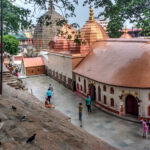
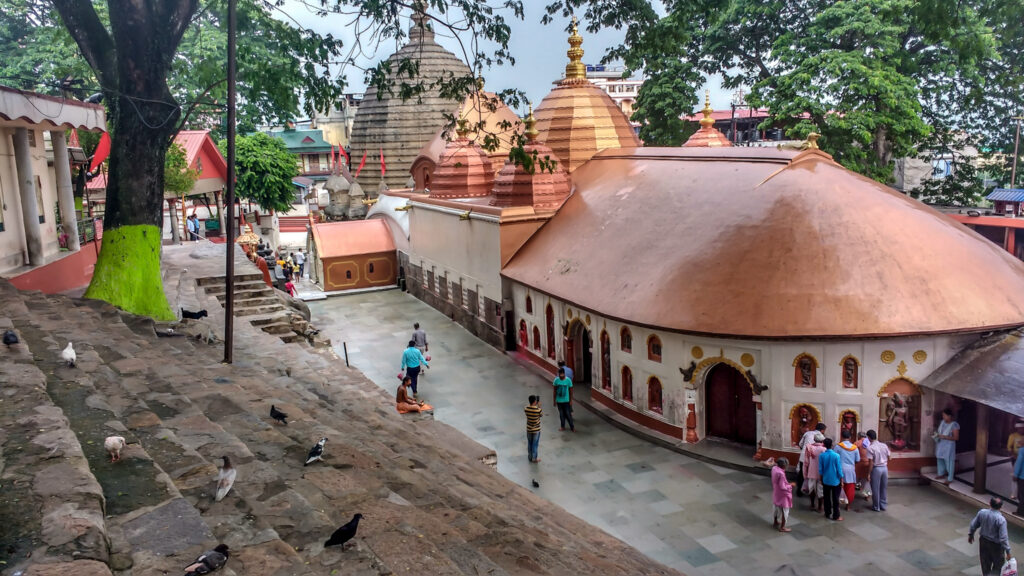
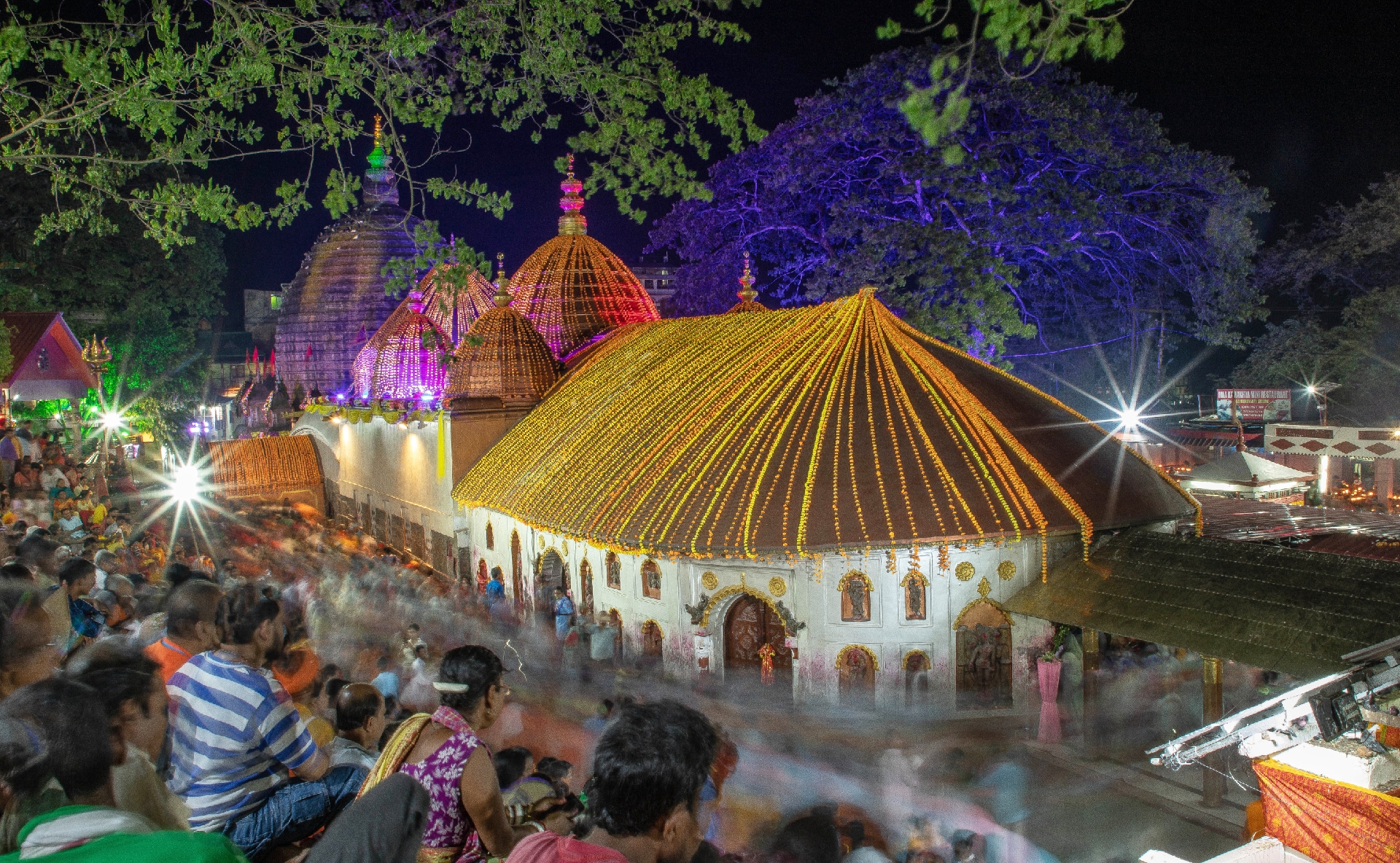
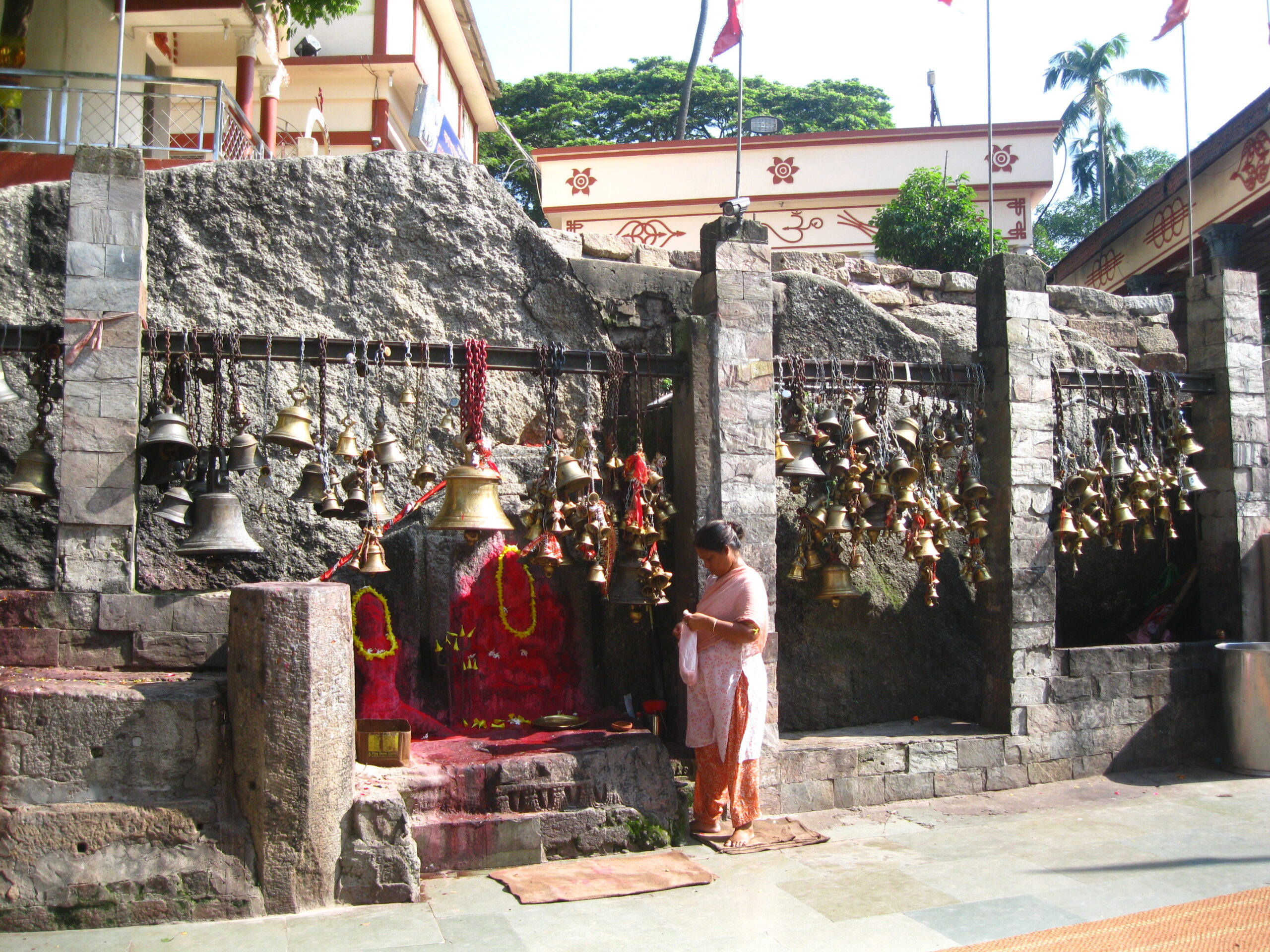
The history of Kamakhya temple also has a physical timeline. While the original temple was destroyed during various invasions, the current structure was rebuilt in the 16th century by King Nara Narayana of the Koch dynasty. The architecture is a unique blend of the traditional Nagara style and local Assamese designs, often referred to as the Nilachal type. When you look at Kamakhya temple photos, you can see the beehive-like dome that stands out against the lush green backdrop of Kamakhya temple Assam.
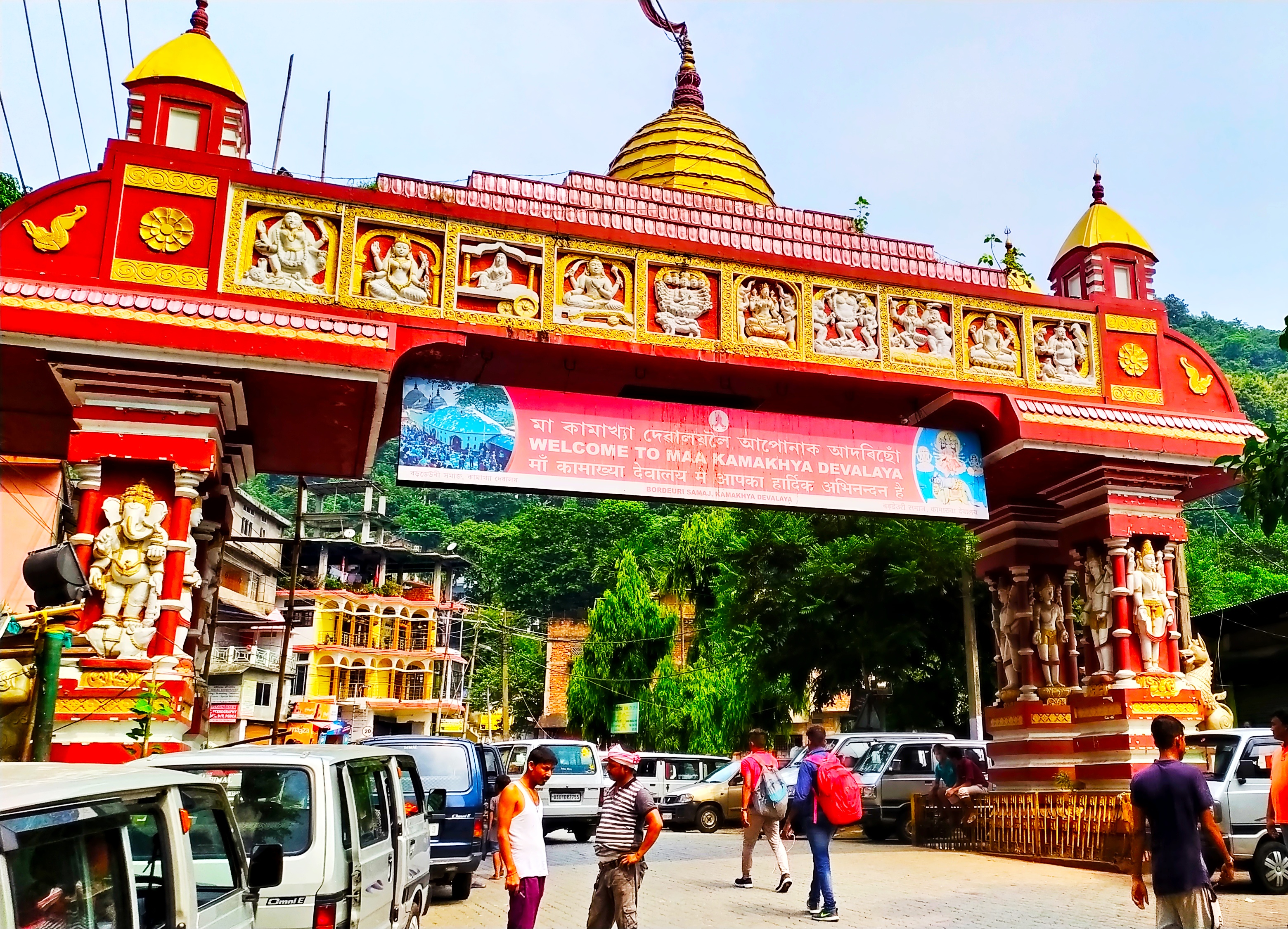
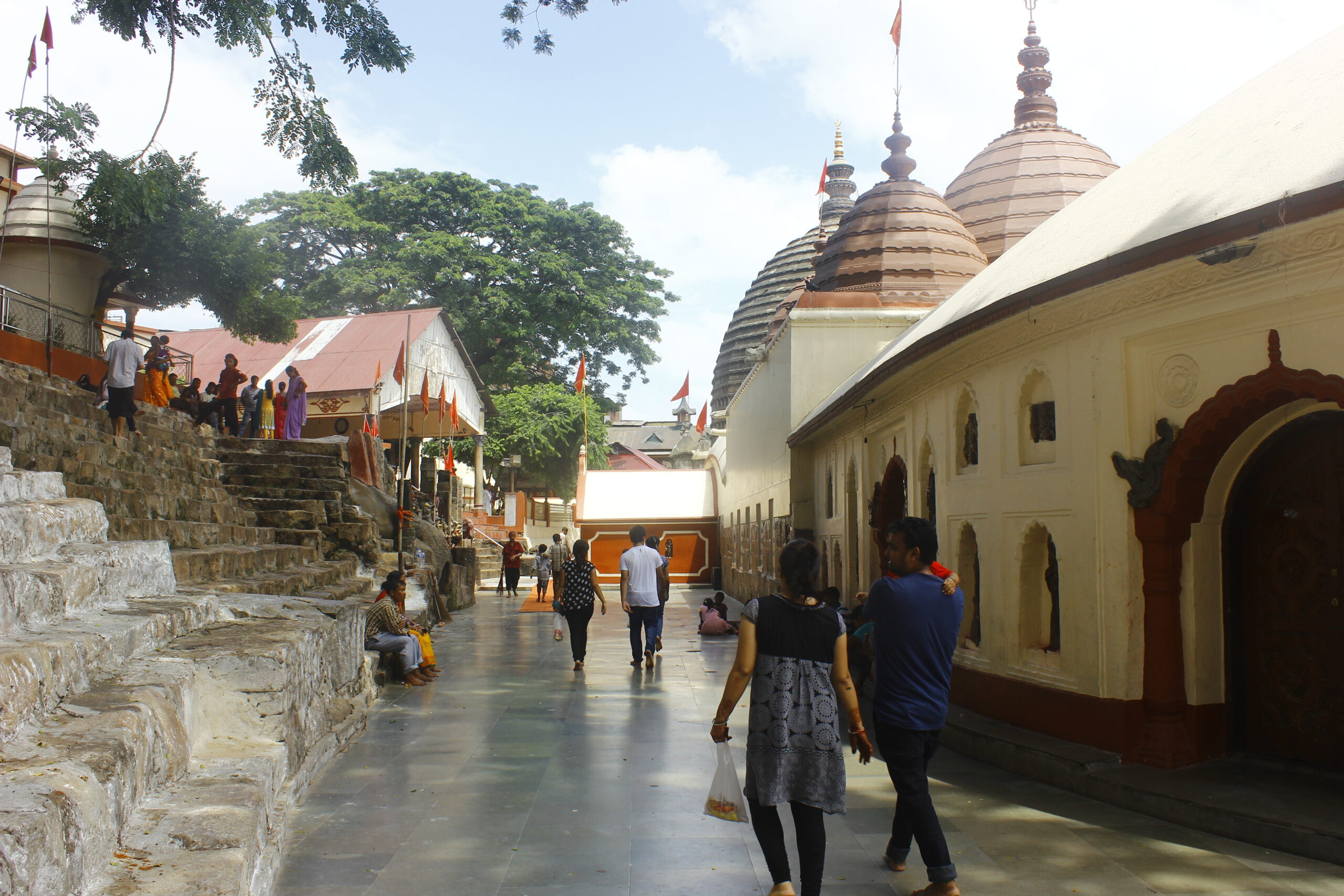
Where is Kamakhya Temple Located?
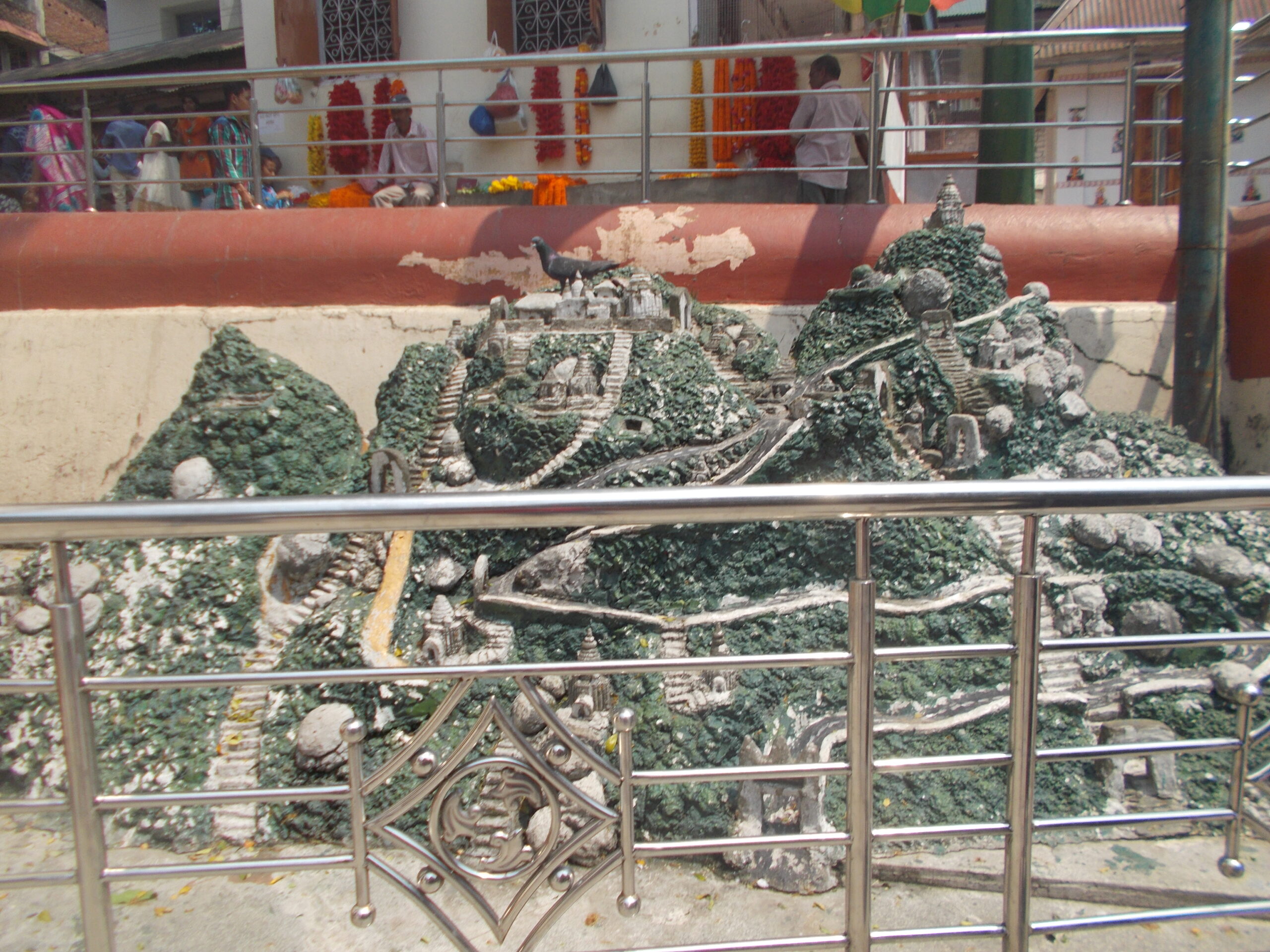
If you are wondering where is Kamakhya temple, it sits atop the Nilachal Hill in the western part of Guwahati, Assam. The location is breathtaking, offering a panoramic view of the Brahmaputra River.
How to Reach the Temple
Getting to the Kamakhya devi ka mandir is relatively easy because Guwahati is well-connected:
By Air: The Guwahati airport to Kamakhya temple distance is about 20 kilometers. You can easily find a taxi or a bus from the airport.
By Train: The Kamakhya station to Kamakhya temple distance is very short—only about 3 to 4 kilometers. It is the nearest railway station, though many people also arrive at the Guwahati Main Station.
By Road: If you are staying in the city, the Guwahati to Kamakhya temple distance is roughly 7–10 kilometers depending on your hotel location.
For the latest travel guidelines and state transport options, you can also check the official Assam Tourism Website before planning your trip.
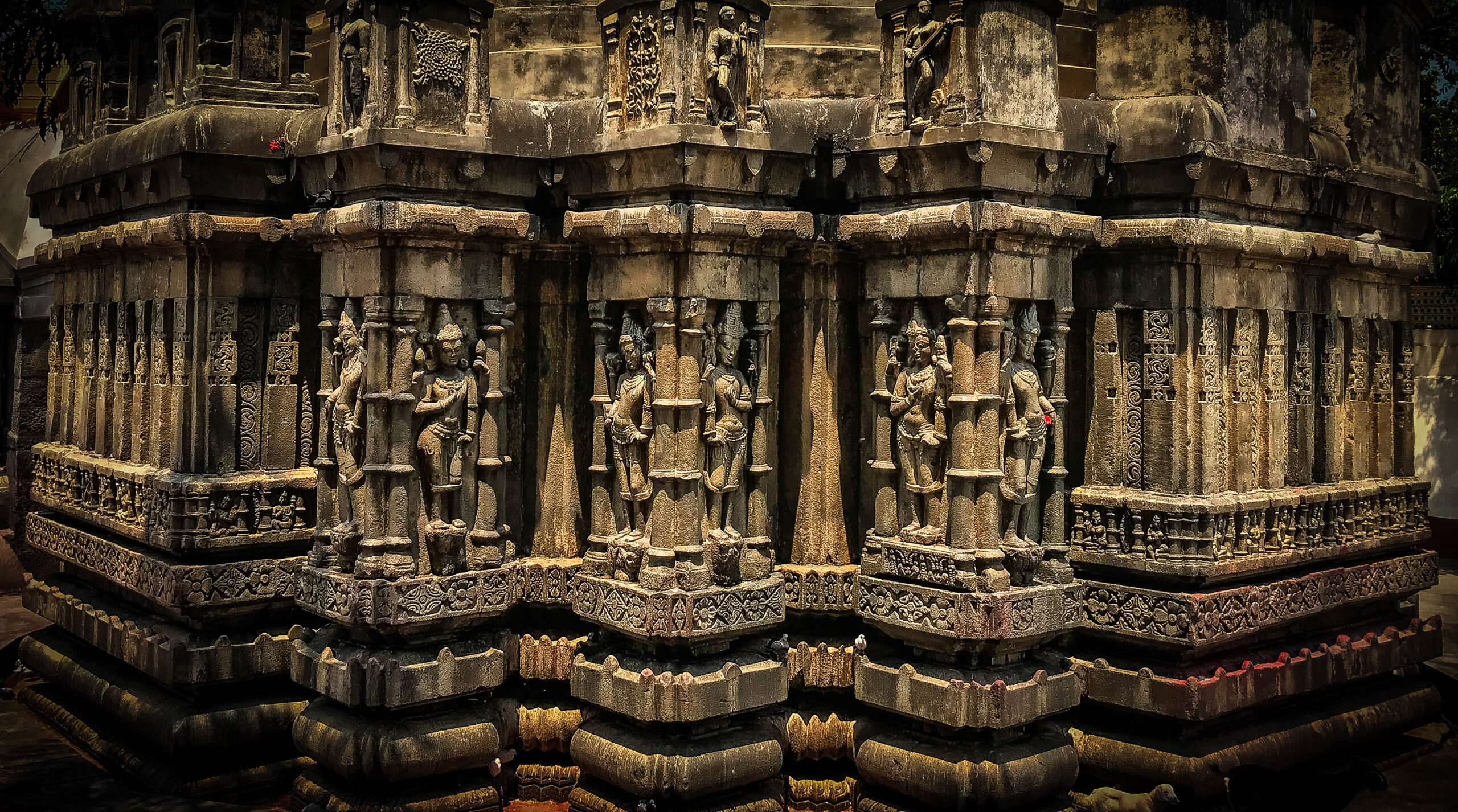
The Sacred Festivals: Why They Are Celebrated and Their Deep History
The Kamakhya Temple is world-renowned for its unique festivals. Unlike other temples where festivals are just about rituals, here, every occasion is tied to a powerful legend and a biological philosophy that celebrates nature.
The Ambubachi Mela: Celebrating the Mother Earth’s Cycle
The most iconic event is the kamakhya temple ambubachi mela. But why do thousands of people flock to kamakhya temple guwahati in the middle of the humid monsoon in June?
The history of Kamakhya temple teaches us that the Goddess is the source of all creation. The kamakhya temple story suggests that during this time, the Goddess (representing Mother Earth) undergoes her annual menstruation cycle. For three days, the maa kamakhya temple remains closed because it is believed the Earth is “unclean” but also deeply fertile and regenerating.
Historically, this has been the most important time for Tantric practitioners. They believe that during these three days, the Earth’s energy is at its peak. When the temple reopens on the fourth day, devotees receive a piece of red cloth (Angodak) which is said to be soaked in the Goddess’s blood. This is not just a myth for the locals; it is a justified celebration of fertility that has been part of kamakhya temple assam for centuries.
Durga Puja: A Royal Legacy of Victory
Durga Puja at maa kamakhya devi is another occasion with a rich historical background. While many celebrate it as the victory over Mahishasura, the kamakhya temple history adds a royal layer to it.
The current tradition was heavily influenced by the Koch and Ahom kings. When you ask who built kamakhya temple to its current glory, King Nara Narayana’s name comes up, and it was during this era that the “Bali” (sacrificial rituals) became a central part of the puja here. These rituals are performed to honor the fierce form of the Goddess who protects her children. For a Hindu seeker, this isn’t just a festival; it is a time to witness the raw, ancient “Shakti” that has protected the Nilachal Hills for generations.
Why This Temple is the Spiritual Heart for Millions
The kamakhya devi mandir holds a significance that is both religious and philosophical, making it important for Hindus and even those outside the faith.
The Crown of the 51 Shakti Peethas:
the maa kamakhya temple is the most important of the 51 Shakti Peethas. Because it represents the Yoni (the womb), which is the literal starting point of life. The kamakhya temple story emphasize that while other Peethas represent different body parts of Sati, Kamakhya represents the power of birth and desire. This is why the temple is often called the “Kamarupa” – the place where one can change their form through desire and devotion.
A Beacon of Feminine Empowerment:
In a world where menstruation is often hidden or treated as a taboo, the kamakhya devi temple stands as a revolutionary fact. It is one of the few places on Earth where a natural female process is worshiped as the highest form of divinity. This makes the temple important for modern thinkers and researchers who see it as a symbol of gender equality and the celebration of the female body.
Whether you are looking for the best time to visit kamakhya temple for spiritual peace or searching for the kamakhya devi original image to understand ancient art, you are participating in a tradition that honors the “Mother” in all her forms. The history here is not just in books; it is in the air of the Nilachal hills and the devotion of every person who walks through the gates of the kamakhya mandir.
Quick Facts & Myths Justified:
The Red Spring:
During Ambubachi, it is said the Brahmaputra river near the hill turns red. While some see this as a miracle of the Goddess’s cycle, others note the presence of hematite (iron oxide) in the soil. Regardless of the science, the timing and the belief make it a powerful spiritual event.
The Staircase of Narakasura:
There is a myth that the demon Narakasura tried to build a staircase to the temple to win the Goddess’s hand. He failed, but the unfinished path still exists. This story is used to justify why ego can never win against divine power.
Understanding Kamakhya Temple Timings and Darshan
Planning your visit around the Kamakhya temple timings is crucial because the crowds can be massive. You don’t want to reach there only to find the gates closed for afternoon rituals.
Daily Schedule
The temple typically follows this schedule, but it can change during festivals:
Morning Opening: 8:00 AM to 1:00 PM.
Afternoon Break: The temple remains closed for Bhog (offerings) between 1:00 PM and 2:30 PM.
Evening Session: 2:30 PM to Sunset (usually around 5:30 PM or 6:00 PM).
Keep in mind that the Kamakhya temple opening time for the general public might see long queues starting as early as 5:00 AM. If you want a peaceful experience, try to arrive very early.
Kamakhya Temple Online Booking and VIP Pass
Let’s be honest: the general queue at Kamakhya can take anywhere from 3 to 10 hours. If you are traveling with elderly parents or have a tight schedule, you should look into the Kamakhya temple VIP pass.
How to Get a VIP Ticket
Counter Booking: You can buy a Kamakhya temple VIP ticket directly at the temple counter. The cost is usually around ₹500 per person.
Kamakhya Temple Online Ticket Booking: While the temple authorities have introduced Kamakhya temple online booking for certain rituals and special darshans, the availability can be inconsistent. It is always a good idea to check the official temple website a few weeks before your trip.
VIP Darshan Timings: Having a VIP ticket doesn’t mean there is zero wait time, but it reduces it significantly. The Kamakhya temple vip darshan timings usually follow the main temple hours.
Frequently Asked Questions
The original temple’s origins are prehistoric, but the current structure was rebuilt by King Nara Narayana of the Koch dynasty in 1565.
Yes, limited kamakhya temple online ticket booking is available through the official portal, but most devotees still purchase the kamakhya temple vip pass from the on-site counter.
The distance is approximately 20 km, which usually takes 45 to 60 minutes by car.
While you can take kamakhya temple photos of the exterior architecture, photography of the kamakhya devi original photo or the inner sanctum is strictly prohibited.
The standard kamakhya temple vip ticket usually costs around ₹500, though prices can fluctuate during major festivals like Ambubachi Mela.
The nearest airport to kamakhya temple is the Lokpriya Gopinath Bordoloi International Airport (GAU) in Guwahati.
Recent Post
-
 Kailasa Temple Ellora: History, Mystery & Visitor Guide
 -
The Ultimate Brihadeshwara Temple Guide: Thanjavur Big Temple History, Architecture, Shrines & Secrets
-
Red Fort Lal Qila: The Ultimate Guide to Delhi's Historic Heart
-
Kamakhya Temple Guide: History, Festivals,& Booking Tips
-
Manikaran Sahib Himachal Pradesh:
-
Ratneshwar Mahadev Temple Varanasi
-
Kashi Varanasi Travel Guide
-
Kaal Bhairav Temple History & Origin
-
Golden Temple Amritsar 2025 – History, Sunrise Tips, Langar & Festivals
-
Jaipur, The Pink City: A Heartfelt Journey into Rajasthan’s Royal Gem